







Who are we when the labels fall away?
Welcome to Letter N1

August has become a special month for me: a time for family, exploration and adventures, physical activity in connection with nature. Away from the usual busyness of the year, there is something about this time that creates space. Space to look inward, and to notice what we overlook when caught up in our routines. That space creates an opportunity to see ourselves a little more clearly.
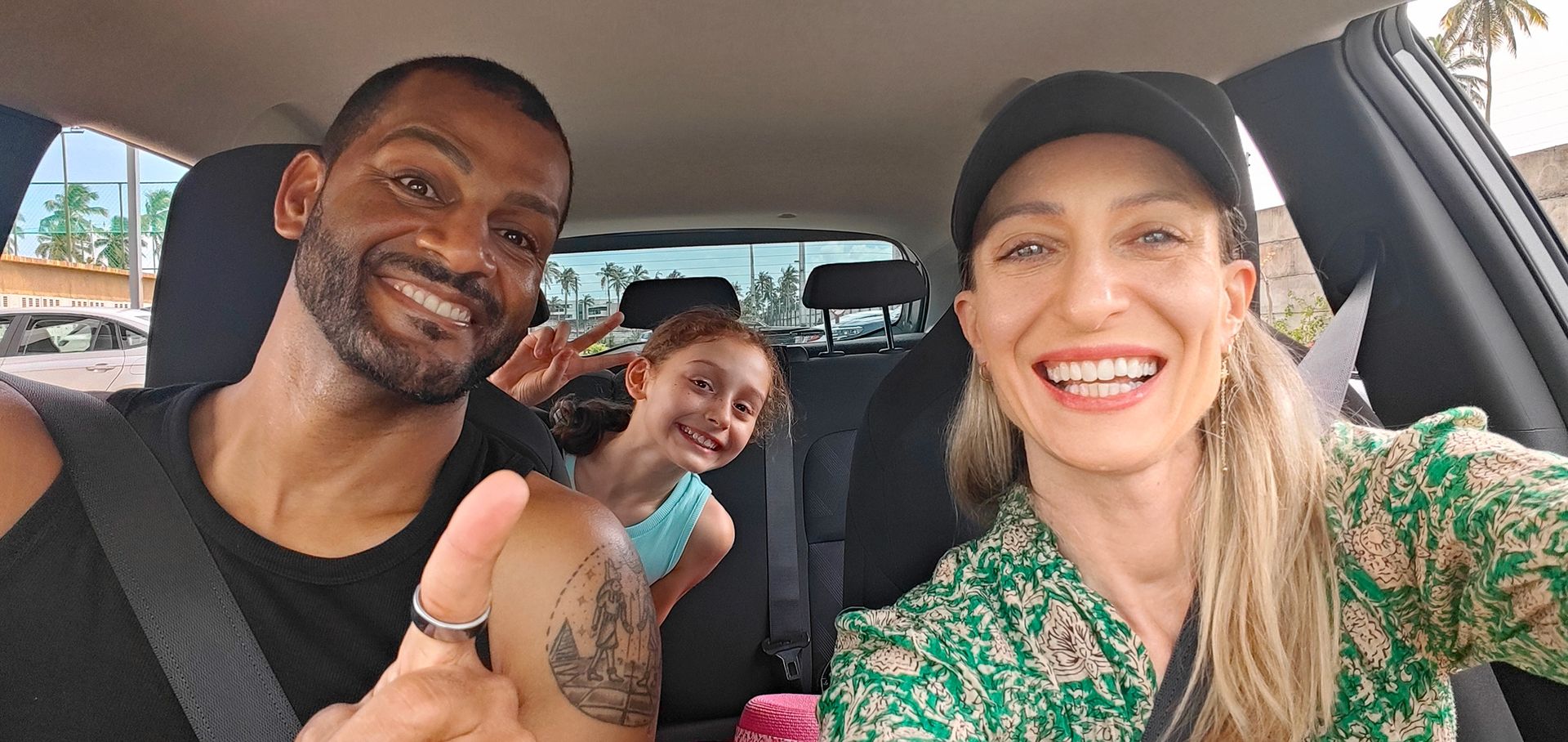
As my family and I make our way along the bumpy roads of our beloved Brazilian Nordeste, I am reminded that two years ago, on another road trip further north, I was reading Beatrice Chestnut and Uranio Paes’s Enneagram Guide to Waking Up for the third time.
Like our adventure, the Enneagram is a journey. That journey can’t be measured in kilometers and destinations visited. It takes us to a place where we can identify patterns that shape how we think, feel and act. What triggers automatic reactions. The fears we protect ourselves from. And in the end, the new possibilities that open up when we begin to see those patterns clearly.
I fell in love with the Enneagram because it manages to be something quite rare: deep without being abstract, both spiritual and remarkably practical.
After doing my own work with my coach and friend Andrea Garfield, I began integrating it into my coaching practice. And despite having worked on myself for more than a decade, it gave me something I didn’t expect: new explanations for old patterns, new perspectives on familiar struggles, and the possibility to go through my days with more lightness, and make new choices.
That is the real power of self-awareness. What we cannot see tends to run us. We can only begin to transform once it becomes visible.
So, if August is giving you a little more space too, I’d like to invite you on an inner road trip.
Over the next few minutes, I’ll help you explore three dimensions of the Enneagram (your type, wing and arrows) and what each can teach you about how you operate at your best, what happens to you under pressure, and where your next opportunity for growth may lie.
No luggage required.
Discovering your Type
The enneagram is like a Brazilian cozido nordestino: a substantial one-pot meal with many ingredients that simmer together for hours, with Portuguese, indigenous and African influences and roughly five centuries of history.
It draws on ancient philosophy (Greek philosophy, Christianism, Sufism and Eastern philosophies) and spiritual traditions of self-awareness and transformation. Those ideas were integrated in the 20th century through the work of Bolivian and Chilean spiritual teachers and psychologists Óscar Ichazo and Claudio Naranjo.
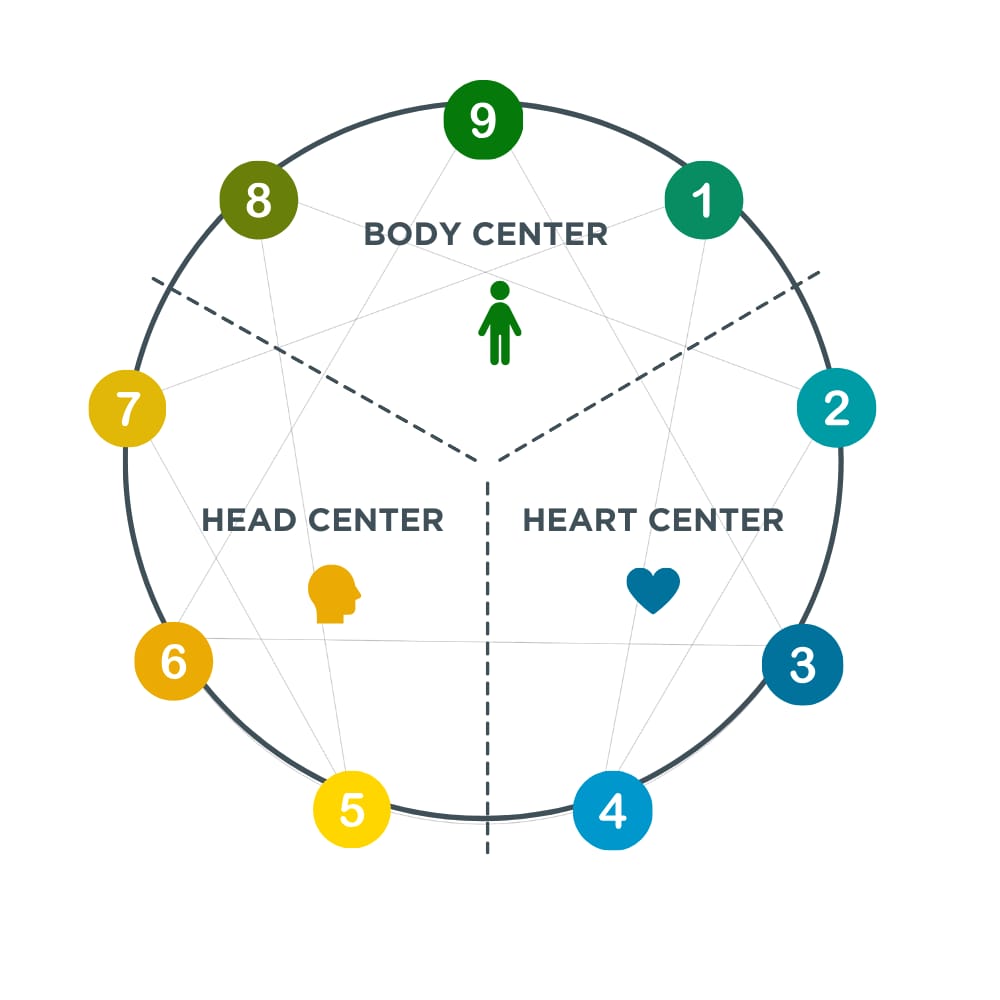
The enneagram should be seen as a tool for self-awareness rather than a scientifically established theory of personality.
It is made of 9 personality types, organized around 3 centers of intelligence (Head, Heart, Body). Each of the 9 types is divided into 3 subtypes. I know your restless mind is already calculating and yes! it makes up essentially 27 combinations.
Enneagram typing is not about putting people into boxes. If anything, it is about understanding the patterns that shape us.
After coaching thousands of people over the past decade and listening to their stories, I have come to see fascinating parallels in the ways our early experiences shape our deepest motivations and fears, as well as the lens through which we see and navigate the world.
The Enneagram is not about fixing people, either. It is about peeling back the layers (our childhood wounds, and the habitual patterns and survival strategies we developed early in life).
Those strategies were often remarkably useful at the time. But they were shaped by a child’s understanding of the world and by the environment we grew up in. As adults, some of them may no longer serve us. Yet we continue to rely on them almost automatically, like a road we travelled way too many times.
The invitation of the Enneagram is to notice these patterns, loosen their grip, and gradually uncover what lies beneath them: our essence (who we are beyond the strategies we developed to survive, succeed and belong).
You can find here descriptions of all 9 types.
There is a real enneagram Amazonia out there, and you may find it hard to know where to go. Here is a reliable test developed by world-class experts Beatrice Chestnut and Uranio Paes:
I recommend buying the 24-page report for a detailed description of your type. For better results, carve out 20-25 minutes of alone time with no risks of interruptions.
Spreading your Wing

We tend to develop characteristics from one of the two types sitting directly next to ours on the Enneagram. This is called our wing. If you are a Type 7, for example, your wing can be either 6 or 8; if you are a Type 9, it can be either 8 or 1.
While your core type helps explain WHY you do what you do, your wing adds nuance to HOW those motivations tend to show up in the world.
If your core type is the flavor of your ice cream (or your açaí, if you share my daughter Chloe’s fascination with this Brazilian superpowered treat!) think of your wing as the topping. It adds a distinctive flavor, but it doesn’t turn your ice cream into something else.
We abbreviate the wing with a w: a Type 6 with a 7 wing, for example, becomes 6w7.
A word of caution before we play with some examples: it is impossible to determine someone’s Enneagram type (or wing) with certainty from observed behavior alone. The Enneagram is fundamentally about inner motivations and fears, not simply what we see on the outside.
With that caveat, let’s have some fun. If we speculate about a few of the football stars we watched at the 2026 World Cup, based solely on their public interviews, behavior and leadership styles, we might imagine:
Kylian Mbappé: possibly a Type 3, the Achiever.
His public persona reflects many qualities associated with Type 3: an extraordinary drive for excellence and performance, ambitious goals, comfort with visibility and high expectations, and a recurring focus on achievement and legacy.
But his wing could give that Type 3 energy two rather different flavors:

- 3w2 might show up through charisma, leadership and a desire to inspire and bring others with him.
- 3w4 might place more emphasis on uniqueness, personal identity and distinguishing himself through individual excellence.
Lamine Yamal: possibly a Type 8, the Challenger.
Yamal projects remarkable fearlessness, self-assurance and competitiveness, with a certain defiance that could point toward Type 8. Where a Type 3 might be driven by “I need to succeed and prove my value,” an 8 is more likely to be driven by “I need to be strong, independent and in control of my own destiny.”

Lionel Messi: possibly a Type 9, the Peacemaker.
Messi’s public persona (with his calm demeanor, humility, consistency and understated leadership) could suggest Type 9. If so, a 9w1 might be plausible: the 1 wing can bring greater discipline, conscientiousness and a strong internal sense of how things should be done.

Of course, we cannot know whether any of these typings are correct without understanding what truly drives these players from within. And that is precisely the point: the Enneagram invites us to look beyond what people do and become curious about why they do it.
Navigating your arrows

In the Enneagram, the arrows describe how each type tends to shift under different conditions—particularly in periods of growth and stress.
Your Growth Arrow points toward qualities you can access and develop as you become more self-aware, grounded and psychologically flexible.
Your Stress Arrow helps you recognize some of the less helpful patterns that may emerge when you are under sustained pressure.
Why does this matter? Because our patterns are often hardest to see precisely when they are taking over. Understanding your arrows gives you an early-warning system: you can learn to recognize when stress is pulling you into behaviors that no longer serve you, and identify the qualities you can consciously draw on to respond differently. In other words, the arrows turn self-awareness into choice.
For me, as a Type 3 (the Achiever), this looks something like this:
- In growth (→ Type 6, the Loyalist): I become more collaborative, loyal and grounded, shifting some of my attention away from individual achievement toward collective success. I allow myself to be more authentic and invested in others rather than constantly focusing on the next goal.
- Under stress (→ Type 9, the Peacemaker): I can move in the opposite direction, disengaging, procrastinating, losing focus or withdrawing from situations that feel overwhelming. Recognizing this pattern helps me catch it earlier rather than mistaking disengagement for simply “needing a break.”
This gives us a simple way to bring the three dimensions together:
Type - Who am I at my core—and what fundamentally drives me?
Wing - What particular flavor do I naturally add to my type?
Arrows - Where do I tend to move under growth or stress?
And if the Enneagram doesn’t resonate with you, that’s perfectly fine. It is a map, not the territory. There are many frameworks that can deepen self-awareness and support development. What matters is not the model you choose, but whether it helps you see yourself more clearly, and gives you more freedom to choose how you respond.
If you want to travel a little further…
If this inner road trip has sparked your curiosity, there is much more to explore. The Enneagram is one of those maps that becomes richer the longer you spend with it and, in my experience, the most interesting discoveries don’t come from identifying your type. They come from noticing your patterns as they unfold in real life.
If you’d like to go deeper, here are a few resources I particularly recommend:
To start: The Enneagram Guide to Waking Up, by Beatrice Chestnut and Uranio Paes. This is still the book I recommend most often. It is accessible, practical and focused not simply on understanding your type, but on using that understanding to grow.
To go deeper: The Complete Enneagram, by Beatrice Chestnut. A much more comprehensive exploration of the nine types and 27 subtypes. This is the book to pick up when you find yourself wanting to understand all the nuances behind your type.
For relationships: The Enneagram in Love and Work, by Helen Palmer. An interesting lens through which to explore how our patterns show up not only within ourselves, but in our relationships with others.
To listen: the Enneagram 2.0 podcast with Beatrice Chestnut and Uranio Paes. Their conversations take the Enneagram beyond personality descriptions and into the territory I find most interesting: awareness, relationships and transformation.
And then, perhaps, put the book down.

Because self-awareness doesn’t only happen while taking a test, reading a book or listening to a podcast. Sometimes the insights arrive when we finally create enough space for them to surface.
On a long walk. In the ocean. Over an unhurried conversation. Looking out of a car window as the landscape changes. Or simply doing nothing for a while.
Wherever August finds you, I hope you get some time to slow down, move, explore, connect, and perhaps notice something about yourself that the busyness of the year has kept hidden.

As for me, there are still a few bumpy roads ahead, some Brazilian coastline to explore, and probably another açaí waiting somewhere along the way.
Wishing you a restorative August and a little space for both the outer and inner journey.
Thank you for reading. Thank you for being here and for being part of my journey. You are what makes it so special 💜.
"Great leadership is about thriving with purpose, amplifying impact, and staying true to your values. Empower yourself to lead boldly, balance wisely, and create lasting change."
What the Enneagram Can Teach You About Yourself
Who are we when the labels fall away?

Birthday Newsletter

Welcome to Letter N1


