







Welcome to Letter N1
Welcome to Letter N1
“You age like fine wine.”
That’s a comment I heard a few weeks ago from a male master’s student while wrapping up a class. I froze for a split second. Was it meant as an awkward compliment or simply inappropriate? By the time I gathered my thoughts, he had already left the room.
Last week, I led a seminar called Women in Finance and Real Estate—2 industries still largely male-dominated. I walked in hopeful that perhaps, a few years from now, spaces like this might no longer be necessary.
But the open and heartfelt conversation that followed suggested otherwise.

When I shared my recent experience with the student, the young women in the room were outraged. Their reactions quickly gave way to stories of their own: self-doubt, microaggressions, even harassment. What followed was a moment of collective honesty. The kind of conversation that reminds us why these spaces still matter.
International Women’s Day is older than most people realize. The first took place in 1911, when women in Austria, Denmark, Germany, and Switzerland marched before most had the right to vote. It was before antibiotics, commercial aviation, or the word “leadership” had entered the business vocabulary.
Much has changed since then. And yet, in some ways, not nearly enough. Many women leaders still navigate a narrow path between being perceived as too soft or too aggressive while confronting both internal doubts and external glass ceilings.
I’ve lived in 7 countries. Everywhere, the conversation sounded different on the surface but identical underneath: doubt, courage, vulnerability.
But the deeper leadership question isn’t limited to women.
In a world defined by uncertainty, many leaders are asking themselves:
- How do I lead through the unknown without letting my doubts take over?
- How do I balance empathy with the courage to make difficult decisions?
- How vulnerable can I be with my team without undermining their confidence?
Over the past 10 days, 3 moments reminded me why these questions matter:
- A masterclass on thriving in the age of AI.
- A training day dedicated to resilient leadership.
- And a conversation with a woman who teaches people to fight for a living but whose real lesson has nothing to do with boxing.
Here’s what stayed with me.
Thriving in the Age of AI
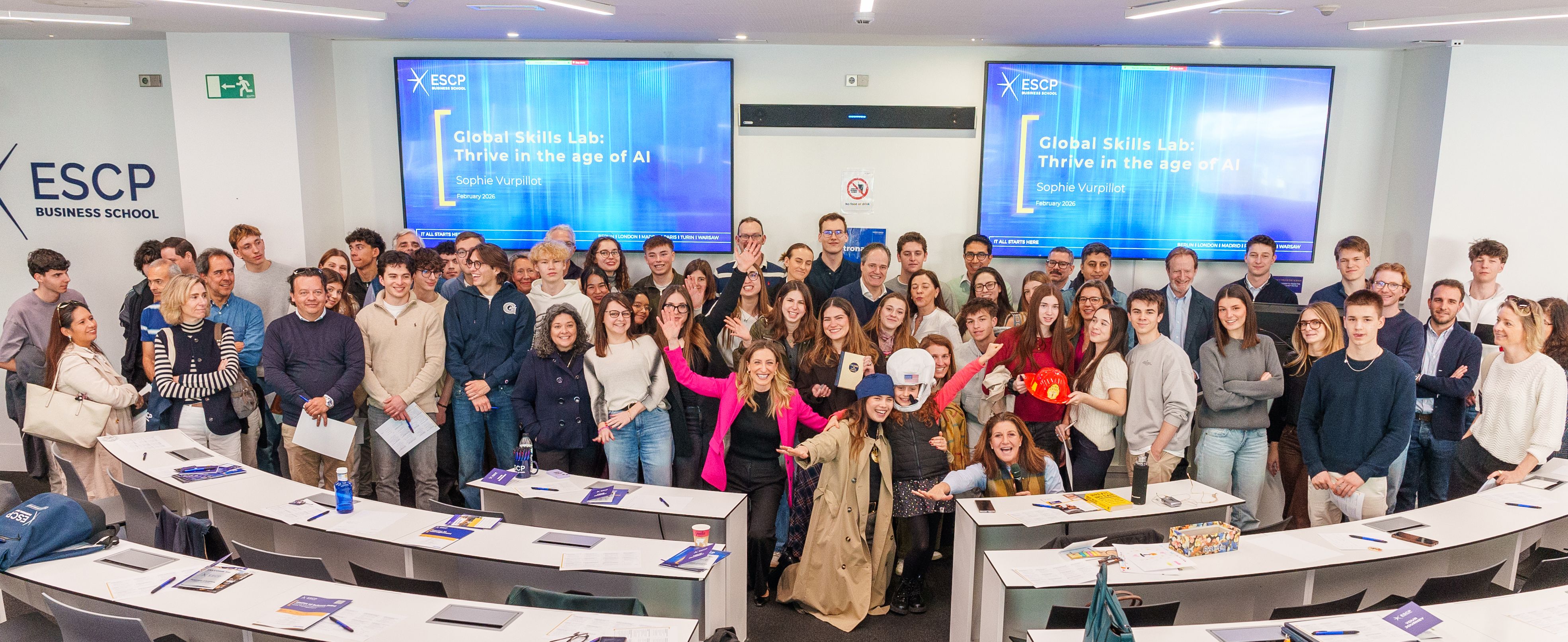
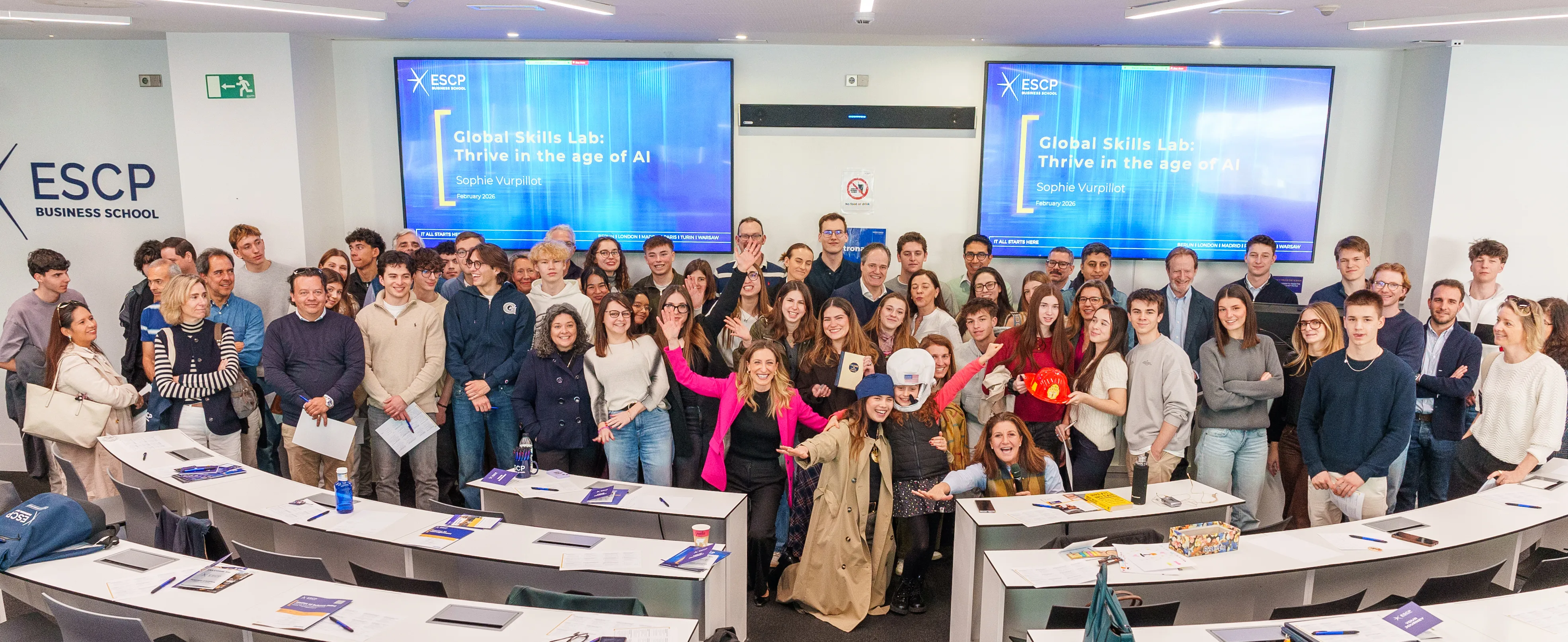
On February 28th had the privilege to lead an interactive masterclass during the Open Day at my alma mater, ESCP Business School (#4 in Europe), on Global Skills: Thriving in the Age of AI.
The event brought together over 150 participants from 15 nationalities, among them Spain, Brazil, Morocco, Pakistan, the US, and the Philippines. It brought together prospective students and a few proud parents who came to support their offspring.
To open the conversation, I shared a quote from an essay by Dario Amodei (co-founder and CEO of Anthropic, the AI company behind the Claude chatbot) titled “The Adolescence of Technology.” One sentence had stayed with me, suggesting that AI may become a defining test of humanity’s maturity as a civilization:
“I believe we are entering a rite of passage, both turbulent and inevitable, which will test who we are as a species.”
A silence settled over the room as everyone paused to reflect.
When we discussed the impact of AI on careers, the audience quickly split into three camps:
- 41% felt optimistic and excited about the new opportunities AI could bring.
- 40% felt overwhelmed or concerned — either because AI seems to be moving too fast (28%) or because it could disrupt their future job (12%).
- The remaining 19% were neutral, viewing AI as simply another tool.

But the reality may be more nuanced.
Liz Tran (author of AQ: A new kind of intelligence for a world that’s always changing) argues that AI doesn’t just change jobs — it changes the competitive landscape. The real competition is not between humans and AI, but between people who adapt and those who don’t.
The conversation quickly became personal: How do I stay relevant, grounded, and agile when the technology around me is evolving at an unprecedented pace?
In other words, it became a leadership question.
We explored the concept of durable skills.
Unlike technical skills (often tied to a specific industry, role, or technology) durable skills are transferable and resilient in the face of technological change. They include adaptability, clear communication, curiosity, critical thinking, emotional regulation, and the ability to learn continuously.
One way to think about this adaptability is through Tran’s concept of AQ (Agility Quotient).
AQ isn’t measured like IQ or EQ. Instead, it helps identify how you tend to respond to uncertainty and change through four archetypes:
- Neurosurgeons: methodical problem-solvers who prefer structure, careful planning, and precision before acting in uncertain situations.
- Novelists: curious explorers who embrace ambiguity and creativity, often experimenting with new ideas and possibilities.
- Firefighters: action-oriented responders who thrive in fast-moving crises and adapt quickly to unexpected challenges.
- Astronauts: visionary pioneers who are comfortable venturing into completely unknown territory and pushing beyond established boundaries.
So the question becomes: which one are you?
You can take the test here: https://liz-tran.com/
Your archetype may evolve over time, as AQ is meant to be developed and strengthened over time.
And an interesting follow-up question: Are you the same archetype across different areas of your life, personal and professional?
The leaders who will thrive in the age of AI won’t necessarily be the ones who master every new tool first.
They’ll be the ones who remain agile: continually learning, experimenting, and adapting as technology and our world keep changing.
What Resilience Actually Looks Like
Last week at ESCP Business School, we kicked off a leadership seminar for 53 international senior leaders from Gonvarri Industries.
Working in manufacturing today is relentless. Geopolitical tensions disrupt value chains. Macroeconomic shifts bring tariffs and uncertainty. At the same time, companies are navigating an ambitious sustainability agenda.
When we walked into the room at 8:30 a.m., you could feel it immediately: readiness, curiosity, and the willingness to engage.
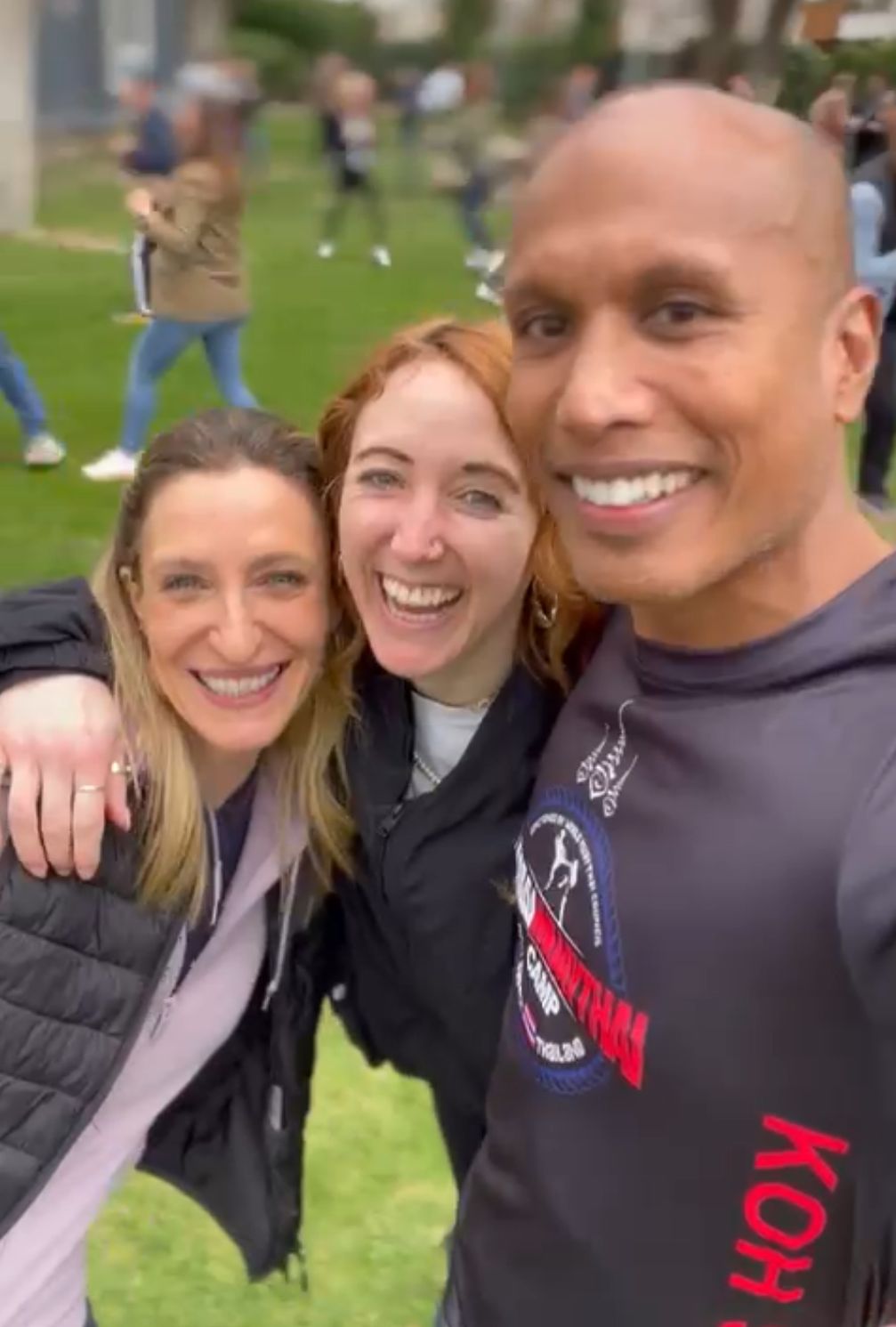
Together with the amazing world champion martial artist Sak Nagayam and boxing coach and journalist Rachel Rose from the High Realities team, we spent the day exploring resilient leadership.
We began the session in the amphitheater, reflecting on how uncertainty affects our physiology. When our sympathetic nervous system is activated, we risk becoming the very kind of leaders we don’t want to be: losing clarity, energy, and our ability to truly listen and connect with our teams. Some leaders withdraw. Others overcompensate.
Then we moved to the garden and brought the conversation into the body through movement. What followed was a transformative experience.
When you box with a partner, the masks fall quickly.
Your emotions become visible: the joy of moving your body, the laughter when something unexpected happens, the frustration when a sequence doesn’t work, the fatigue that sets in.
And one thing becomes immediately clear: trust is not a nice-to-have.
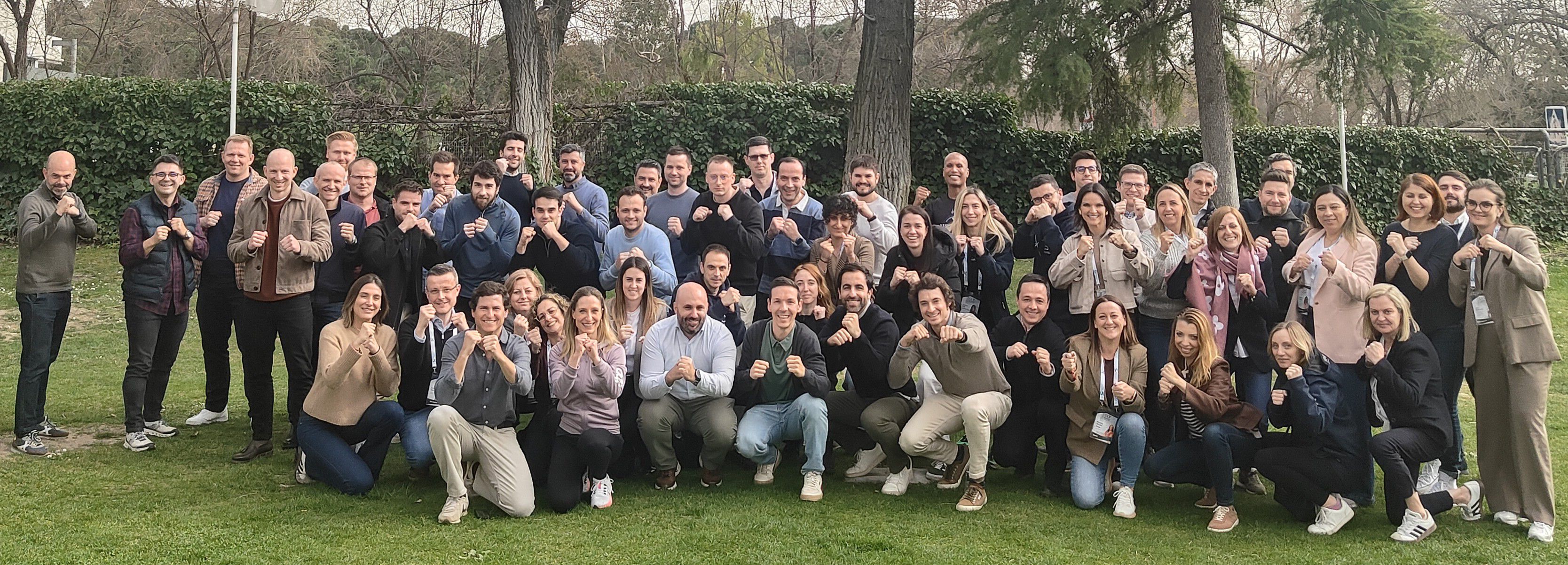
Without trust, someone gets hurt.
Trust is built through constant communication, not only through words, but through presence: facial expressions, body language. Your partner is there to guide you, help you improve, and protect you.
Boxing is also about expanding your comfort zone. For many participants, the day meant doing something entirely new: unfamiliar movements, new sensations, reflexes they didn’t know they had.
And perhaps most challenging of all: adapting to a partner from another country and business unit you’ve just met, and within minutes creating a space that feels both intimate and vulnerable.
Boxing becomes a powerful metaphor for the uncertainty leaders navigate every day. It highlights the necessity of clear, constant communication with teams and stakeholders. It also reminds us that vulnerability (admitting when we don’t have all the answers) does not weaken leadership. On the contrary, it opens the door to authenticity.
And authenticity is what builds trust.
It echoed a recent reflection I read last week from my friend Andrea Garfield:
“Certainty during uncertainty isn't leadership. It's performance. And your people can tell the difference. When you pretend to have answers you don't have, you're not creating safety. You're creating distrust. They know the world is unstable right now. What they need is a leader who can hold complexity without faking clarity. That's what builds confidence in your leadership.”
Hero Spotlight
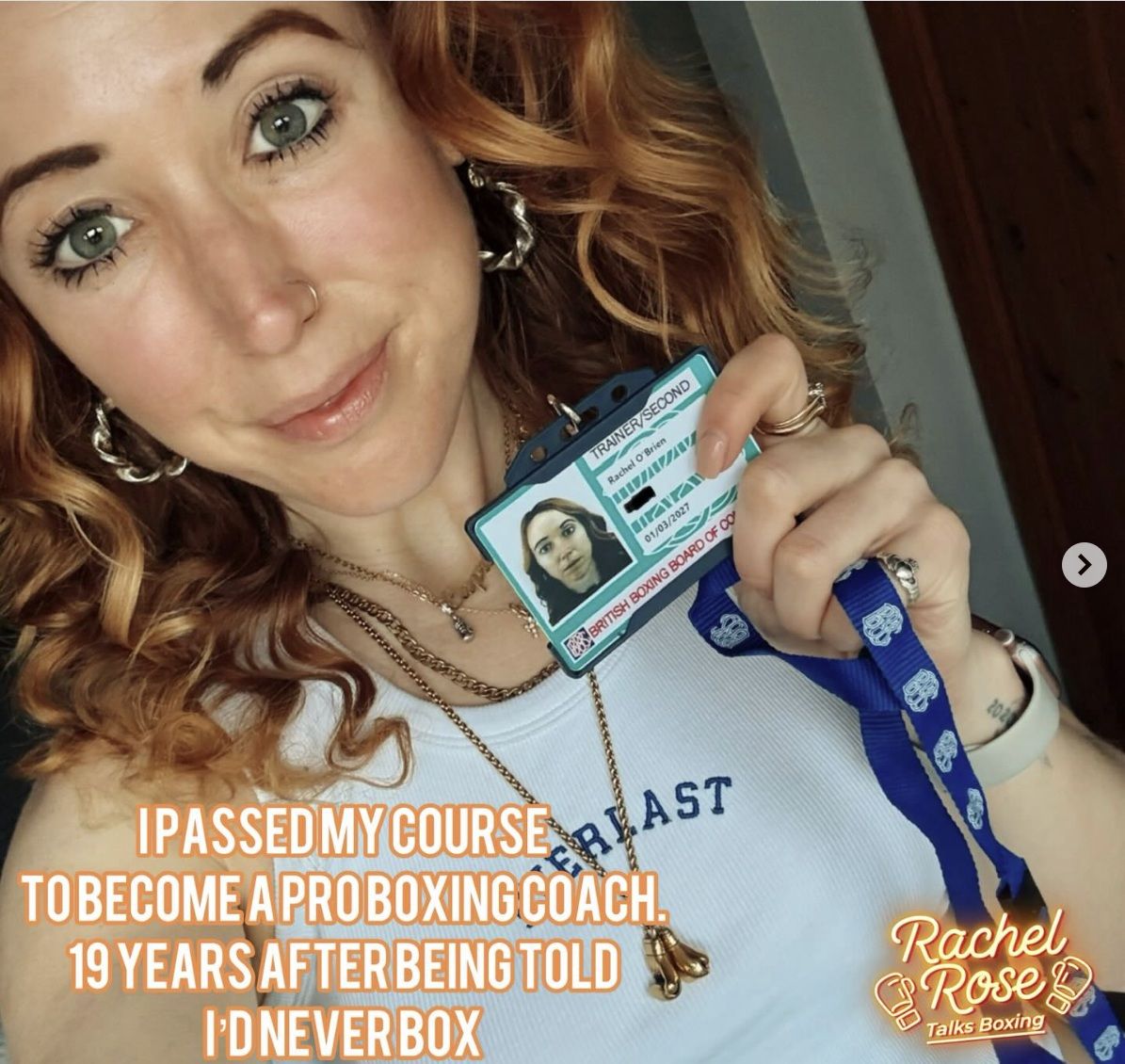
I met Rachel Rose only a few days ago in Madrid. The moment I walked into the restaurant I had booked to celebrate our friend Sak’s birthday, I sensed this encounter would matter. Some people carry a kind of light and kindness that fills the room. Rachel is one of them.
Like the Turkish saying that cats have six lives, Rachel seems to have lived several already: former actor and dancer, now a boxing coach, boxing journalist, singer, and leadership trainer.
Although, truth be told, she’s much more of a dog person. Her dog Terrence briefly joined the beginning of our conversation.
She has also carried several names. Born Rachel O’Brian, she went through a profound identity crisis during Covid. After a life-shattering breakup and losing almost everything, she rebuilt herself from the ground up. For a while she called herself Phoenix Rose, a name that reflected her rebirth. Eventually, through boxing, she found her way back to Rachel.
“For a long time as a singer and actor, I was my credentials,”
she told me. “When boxing, I let myself exist.”
Rachel discovered boxing almost by accident while dancing at a university boxing event. Watching the fighters, she felt something awaken inside her. She never imagined she would step into the sport herself. And yet, boxing has now been part of her life for nineteen years.
During her first training session, a coach asked how long she had been boxing.
“Twenty minutes,” she replied.He looked puzzled. “No… I mean in life.”
It had literally been twenty minutes.
Realizing she had natural talent was a moment of pride. “I realized I was stronger than I thought I was.” Then came the shock: she was diagnosed with a heart condition that would prevent her from becoming a professional fighter. That was a shattering moment: “I’m good at it, but I can’t do it.”
But Rachel found another path. If she couldn’t fight, she could still serve the sport as a coach and as a boxing voice in the media.
Through boxing, she helps people rebuild themselves after trauma, heartbreak, addiction, or loss.
“When I coach, I want people to realize they have more to give than they think.”
The gym becomes something rare: a place of trust, structure, discipline—and emotional safety.
“You can be angry there. You can cry. It’s a safe release zone.”
When she said, “AI won’t take my job,” we both laughed. She’s probably right.
As a journalist, Rachel is on a mission to tell a different story about boxing: one that highlights its nurturing power.
“Boxing changes lives. It saves lives on a regular basis. All those quiet stories…”
Her goal is simple and profound: help people love themselves more, and be kinder to each other.
Listening to Rachel’s empowering philosophy, I couldn’t help but think of the work of the sensational leaders I have the privilege of accompanying every day. Different arenas. The same inner fight.
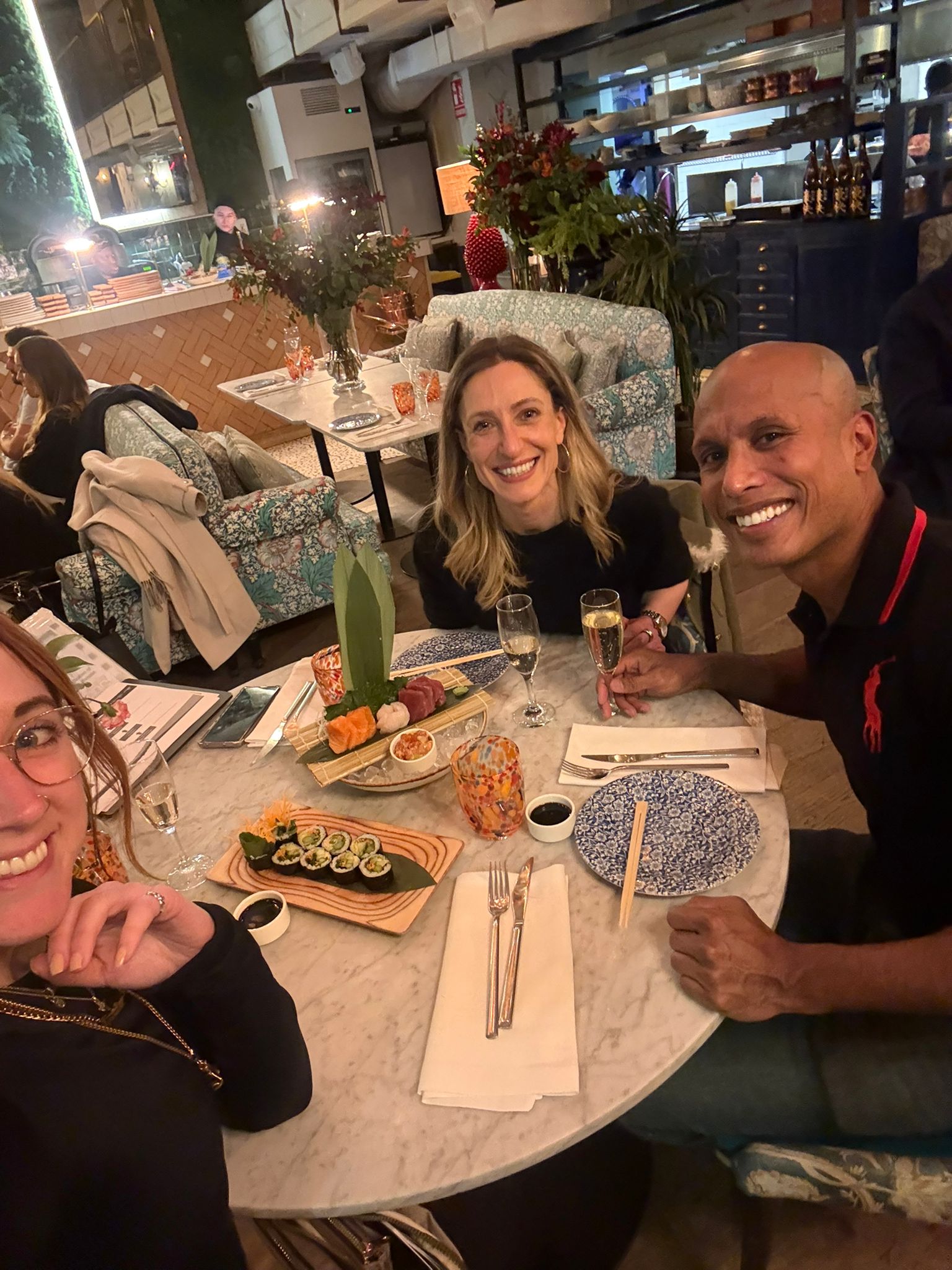
Where to find Rachel:
Instagram: @rachelroseboxing
LinkedIn: Rachel Rose
Listen to her music: Spotify
"Great leadership is about thriving with purpose, amplifying impact, and staying true to your values. Empower yourself to lead boldly, balance wisely, and create lasting change."
What the Enneagram Can Teach You About Yourself
Who are we when the labels fall away?

Birthday Newsletter
Welcome to Letter N1


